


-
-
Introduction
In 2026, industrial design in Kazakhstan and the CIS is undergoing a large-scale transformation. Growing economic activity, government investment, the transition to green energy, and digitalization are opening up new opportunities for engineers, investors, and industrial enterprises. In this context, Stron Engineering (Holding) stands out as one of the key leaders shaping the standards of integrated engineering design across the region.
What Is Industrial Engineering Design
Industrial engineering design is a комплекс of engineering, architectural, and technological solutions aimed at the creation, reconstruction, and optimization of industrial facilities such as plants, manufacturing enterprises, logistics centers, and energy facilities.
Key objectives of industrial engineering design include:
creating efficient technological processes;
ensuring production safety;
optimizing costs and the entire life cycle of the facility;
implementing innovations and modern technologies.
Key Trends in Industrial Engineering Design in 2026
1. Digital Transformation of Design Processes
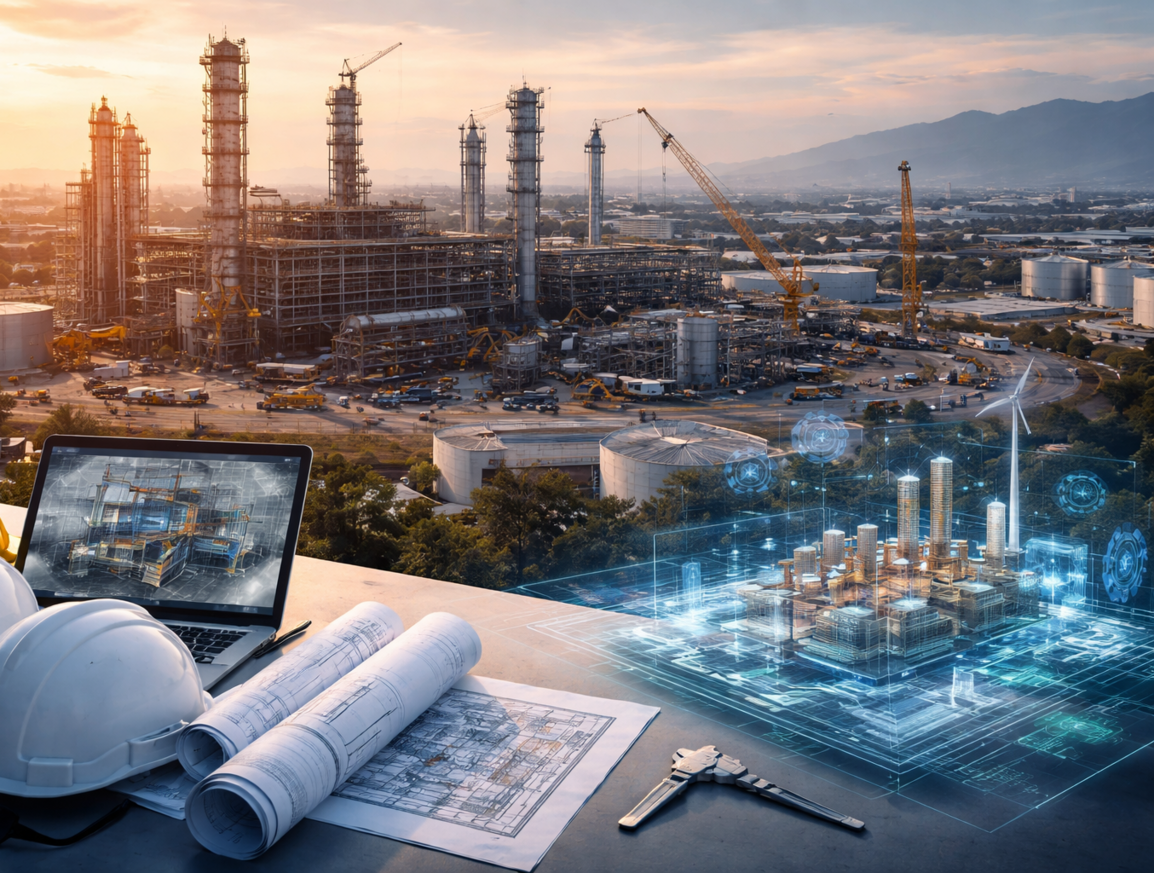
One of the leading trends of 2026 is the transition to full digitalization of design workflows. CAD tools, integrated data management platforms, and automation of routine tasks significantly reduce project timelines and eliminate errors.
Stron Engineering (Holding) actively implements digital solutions for:
modeling technological processes;
real-time data management;
online coordination of project teams.
These approaches increase transparency, accuracy, and speed of work.
2. Implementation of BIM Technologies at All Stages
BIM (Building Information Modeling) is one of the key drivers of quality growth in industrial design. In 2026, BIM usage has become a standard not only in construction, but also in the design of complex industrial facilities.
Key advantages of BIM:
early-stage project visualization;
reduced construction error risks;
integration of all engineering systems;
cost optimization throughout the entire asset life cycle.
Stron Engineering (Holding) integrates BIM processes into complex projects, ensuring a high level of coordination across all disciplines: architecture, structures, engineering systems, and technological solutions.
3. Integration of Artificial Intelligence and Big Data Analytics
AI algorithms and data analytics help predict potential risks, optimize process schemes, and select optimal engineering solutions based on real data. This opens new opportunities for:
modeling emergency scenarios;
automated selection of optimal equipment parameters;
project resource management.
4. Green Standards and Sustainability
Today, sustainable design is no longer a trend—it is a mandatory standard. International and national regulations in Kazakhstan and the CIS encourage projects with minimal environmental impact and the use of energy- and resource-efficient technologies.
Key focus areas include:
energy-efficient engineering solutions;
reduction of greenhouse gas emissions;
use of alternative energy sources;
environmental monitoring and control.
The construction and reconstruction of industrial facilities managed by Stron Engineering (Holding) comply with sustainable development requirements and ESG standards, making projects attractive to international investors and funds.
5. Integration of Asset Lifecycle Management
Modern design goes beyond “drawings and specifications.” It now includes:
operational planning;
maintenance strategies;
modernization;
disposal and secondary use of resources.
This is especially critical for large industrial facilities, where total lifecycle costs may exceed initial construction costs.
6. Growing Demand for Integrated Solutions
Integrated engineering design is increasingly demanded by investors and government clients. It includes:
feasibility studies and pre-design analysis;
master planning;
engineering surveys;
design of technological units;
construction management and commissioning.
Stron Engineering (Holding) delivers turnkey solutions, combining multidisciplinary expertise and creating a strong synergistic effect for projects of any complexity.
Industrial Engineering Design in Kazakhstan and the CIS: Regional Specifics
Kazakhstan
Kazakhstan is actively developing:
the mining and metallurgical complex;
the energy sector (both conventional and renewable);
mineral processing industries;
logistics and transport corridors.
State policy is focused on modernizing the industrial base, which increases demand for high-quality, professional engineering design services.
CIS
CIS countries (Russia, Uzbekistan, Belarus, and others) are also focused on:
import substitution of complex technologies;
infrastructure development;
digital modernization of outdated industrial facilities.
Projects in the region require a multidisciplinary approach and a deep understanding of industry-specific standards and regulations.
Examples of Successful Practices
Stron Engineering (Holding) implements projects that:
integrate BIM and digital twins;
ensure sustainability and energy efficiency;
minimize risks at all stages.
These projects demonstrate how modern technologies enhance the investment appeal of industrial facilities and create a solid foundation for future growth.
Conclusion: What to Expect in 2026–2027
The prospects for industrial engineering design in Kazakhstan and the CIS are associated with:✔ widespread adoption of digital technologies;✔ growth of engineering team competencies;✔ sustainable and “green” standards;✔ integrated solutions for large-scale investment sites.
In this context, Stron Engineering (Holding) remains a key player, offering modern high-tech solutions and shaping engineering trends at the regional level.
Stron
Engineering
-
INDUSTRIAL ENGINEERING
-
01
Development of design and estimate documentation for the construction of civil and industrial facilities, in frame and frameless design, monolithic and prefabricated structures and buildings, metal structures, reinforced concrete;
-
02
Design of outdoor power supply systems, outdoor and indoor electric lighting, power electrical equipment and substations;
-
03
Design of trunk and intra-block fiber-optic communication lines, video surveillance systems, security and access systems;
-
04
Design of external water supply, sewerage, water drainage and drainage, gas supply, and heat supply networks;
-
05
Engineering surveys (engineering-topographic; engineering-geodetic; engineering-hydrological, engineering-geological;
-
06
Technical inspection of buildings and structures;
-
07
ВIM design;
-
08
3D laser scanning;
-
09
Qualified legal support for projects.
-
01
-
MINING & METALLURGICAL ACTIVITIES
-
01
Development of design and estimate documentation for the construction of mining facilities;
-
02
Adaptation of projects and technological processes in the mining and metallurgical sector of foreign projects and design solutions to Kazakhstani norms and requirements;
-
03
Design of roads and railways;
-
04
Development of environmental projects;
-
05
Industrial safety;
-
06
Preparation of tender documentation;
-
07
Evaluation and analysis of objects to determine the cost of engineering and design;
-
08
ВIM design;
-
09
Comprehensive implementation of author's supervision;
-
10
Development of projects for related infrastructure facilities for mining, processing and metallurgical industries;
-
11
Carrying out engineering survey work.
-
01
-
MINING & METALLURGICAL ACTIVITIES
-
01
Development of design and estimate documentation for the construction of civil and industrial facilities, in frame and frameless design, monolithic and prefabricated structures and buildings, metal structures, reinforced concrete;
-
02
Design of outdoor power supply systems, outdoor and indoor electric lighting, power electrical equipment and substations;
-
03
Design of trunk and intra-block fiber-optic communication lines, video surveillance systems, security and access systems;
-
04
Design of external water supply, sewerage, water drainage and drainage, gas supply, and heat supply networks;
-
05
Engineering surveys (engineering-topographic; engineering-geodetic; engineering-hydrological, engineering-geological;
-
06
Technical inspection of buildings and structures;
-
07
ВIM design;
-
08
3D laser scanning;
-
09
Qualified legal support for projects.
-
01
-
CIVIL AND INDUSTRIAL ENGINEERING
-
01
Development of design and estimate documentation for the construction of mining facilities;
-
02
Adaptation of projects and technological processes in the mining and metallurgical sector of foreign projects and design solutions to Kazakhstani norms and requirements;
-
03
Design of roads and railways;
-
04
Development of environmental projects;
-
05
Industrial safety;
-
06
Preparation of tender documentation;
-
07
Evaluation and analysis of objects to determine the cost of engineering and design;
-
08
ВIM design;
-
09
Comprehensive implementation of author's supervision;
-
10
Development of projects for related infrastructure facilities for mining, processing and metallurgical industries;
-
11
Carrying out engineering survey work.
-
01
-
CIVIL AND INDUSTRIAL ENGINEERING
-
01
Development of design and estimate documentation for the construction of civil and industrial facilities, in frame and frameless design, monolithic and prefabricated structures and buildings, metal structures, reinforced concrete;
-
02
Design of outdoor power supply systems, outdoor and indoor electric lighting, power electrical equipment and substations;
-
03
Design of trunk and intra-block fiber-optic communication lines, video surveillance systems, security and access systems;
-
04
Design of external water supply, sewerage, water drainage and drainage, gas supply, and heat supply networks;
-
05
Engineering surveys (engineering-topographic; engineering-geodetic; engineering-hydrological, engineering-geological;
-
06
Technical inspection of buildings and structures;
-
07
ВIM design;
-
08
3D laser scanning;
-
09
Qualified legal support for projects.
-
01
-
MINING & METALLURGICAL ACTIVITIES
-
01
Development of design and estimate documentation for the construction of mining facilities;
-
02
Adaptation of projects and technological processes in the mining and metallurgical sector of foreign projects and design solutions to Kazakhstani norms and requirements;
-
03
Design of roads and railways;
-
04
Development of environmental projects;
-
05
Industrial safety;
-
06
Preparation of tender documentation;
-
07
Evaluation and analysis of objects to determine the cost of engineering and design;
-
08
ВIM design;
-
09
Comprehensive implementation of author's supervision;
-
10
Development of projects for related infrastructure facilities for mining, processing and metallurgical industries;
-
11
Carrying out engineering survey work.
-
01
-
What We Offer:
Employment:
Work in a Kazakhstan-based company
Salary:
USD 3–5 per hour.
Payment is task-based: each task is assigned with a clearly defined number of hours based on an 8-hour workday. If a task is completed ahead of schedule, payment will be made upon actual completion.
Location:
Kostanay, Kazakhstan
Key Responsibilities:
Architectural design solutions;
Coordination with engineering disciplines.
Requirements:
Higher education in Architecture;
At least 10 years of experience on industrial projects;
Technical English proficiency (mandatory);
Proficiency in Archicad, AutoCAD, Revit;
Mandatory experience working with BIM;
Relevant professional certificates and completion of specialized courses are required.

comments (0)
Leave a comment