


-
-
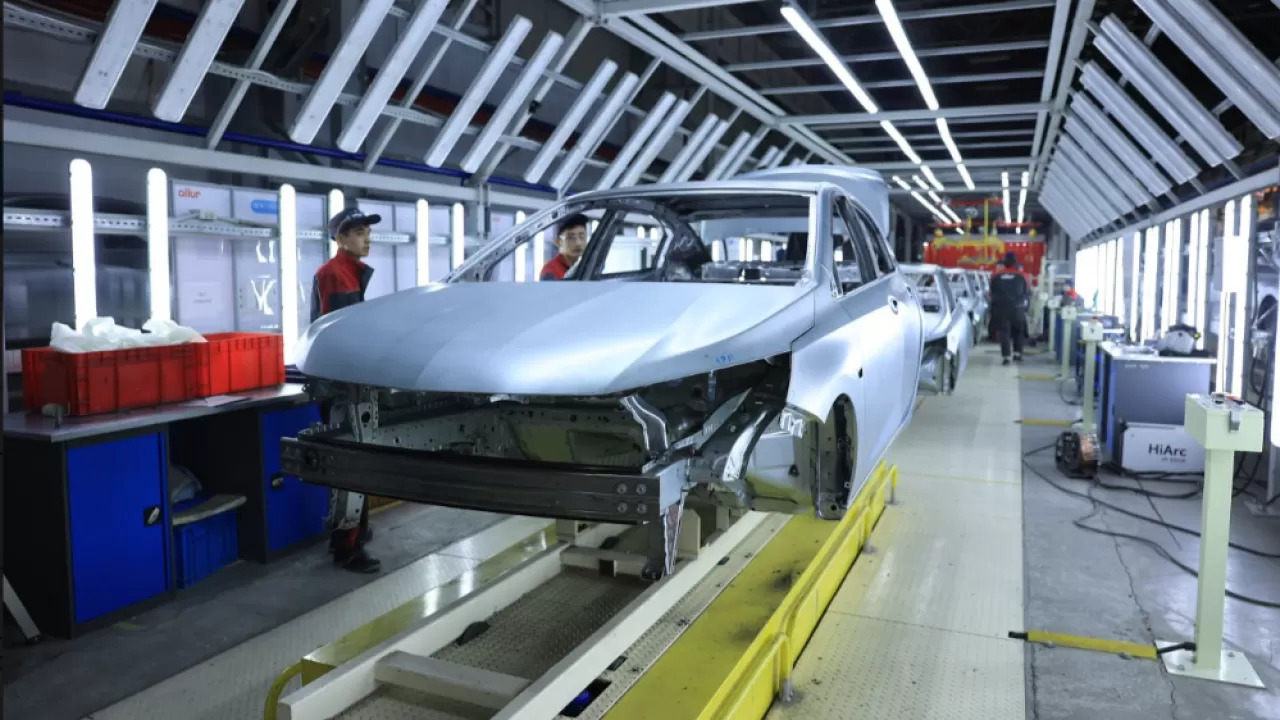
Kazakhstan is transitioning from a “extract and sell” model to a strategy focused on deep processing. At an expanded government meeting chaired by President Kassym-Jomart Tokayev, impressive figures were announced: over 200 new industrial facilities were launched last year, with another 200 currently being prepared for opening.
What lies behind these numbers, and why has the focus shifted specifically toward geological exploration right now? Let’s dive into the details.
Betting on "High-Value Added" Processing
Prime Minister Oljas Bektenov has stated directly: current growth rates in the manufacturing sector are not yet sufficient to fully break the economy’s “raw material dependence.” The solution lies in transitioning to high-value-added products.
Key Driver Industries:
Metallurgy: Moving away from exporting concentrate toward the production of finished goods.
Mechanical Engineering: Localizing manufacturing and establishing full-cycle assembly lines.
Agro-Industrial Complex (AIC): Shifting from merely growing grain to deep processing.
All these projects receive support through the “Baiterek” National Management Holding, enabling businesses to launch large-scale enterprises that were previously considered unfeasible.
Geological Exploration 2.0: Moving Beyond the Soviet Legacy
To keep the factories running, they need raw materials. This is where Kazakhstan is making a true technological leap. In 2025, the development of a detailed geological map (1:50,000 scale) commenced.
Key Fact: Until now, the country relied on 1:200,000 scale maps compiled back in the Soviet era. The new map is four times more accurate, radically changing the game for investors.
The Figures Speak for Themselves: The Scale of Change
The Government of Kazakhstan is moving toward unprecedented levels of funding for subsoil exploration. To understand the scale, one only needs to look at the investment dynamics: while $760 million was directed into geological exploration over the past 30 years, the plan for the next 3 years alone involves $500 million in state investment.
In parallel with the state, the private sector is also actively contributing: since 2023, the volume of private investment in the industry has already exceeded $500 million.
Over the next three-year period, there are plans to explore 100,000 square kilometers of the most promising areas. This is a massive undertaking that includes a full cycle of modern subsoil diagnostics: from high-tech airborne geophysical surveys to highly complex seismic testing.
This approach allows for more than just searching for resources “blindly”; it creates a precise digital database that will serve as the foundation for the country’s new industrial giants.
Why Does This Matter for Us?
Industrial development is more than just figures in a report. It represents:
New Jobs: 400 plants (both operational and under construction) mean tens of thousands of vacancies for skilled professionals.
Technological Sovereignty: The more we produce domestically, the less we depend on imports and global commodity price fluctuations.
Infrastructure: New factories drive the development of roads, energy networks, and regional digitalization.
Kazakhstan is betting on “smart” industrialization. The combination of large-scale subsoil exploration and the launch of high-value-added manufacturing is the foundation upon which the next-generation economy will be built.
Which industrial sector in Kazakhstan do you think is the most promising? Let us know in the comments!
Stron
Engineering
-
INDUSTRIAL ENGINEERING
-
01
Development of design and estimate documentation for the construction of civil and industrial facilities, in frame and frameless design, monolithic and prefabricated structures and buildings, metal structures, reinforced concrete;
-
02
Design of outdoor power supply systems, outdoor and indoor electric lighting, power electrical equipment and substations;
-
03
Design of trunk and intra-block fiber-optic communication lines, video surveillance systems, security and access systems;
-
04
Design of external water supply, sewerage, water drainage and drainage, gas supply, and heat supply networks;
-
05
Engineering surveys (engineering-topographic; engineering-geodetic; engineering-hydrological, engineering-geological;
-
06
Technical inspection of buildings and structures;
-
07
ВIM design;
-
08
3D laser scanning;
-
09
Qualified legal support for projects.
-
01
-
MINING & METALLURGICAL ACTIVITIES
-
01
Development of design and estimate documentation for the construction of mining facilities;
-
02
Adaptation of projects and technological processes in the mining and metallurgical sector of foreign projects and design solutions to Kazakhstani norms and requirements;
-
03
Design of roads and railways;
-
04
Development of environmental projects;
-
05
Industrial safety;
-
06
Preparation of tender documentation;
-
07
Evaluation and analysis of objects to determine the cost of engineering and design;
-
08
ВIM design;
-
09
Comprehensive implementation of author's supervision;
-
10
Development of projects for related infrastructure facilities for mining, processing and metallurgical industries;
-
11
Carrying out engineering survey work.
-
01
-
MINING & METALLURGICAL ACTIVITIES
-
01
Development of design and estimate documentation for the construction of civil and industrial facilities, in frame and frameless design, monolithic and prefabricated structures and buildings, metal structures, reinforced concrete;
-
02
Design of outdoor power supply systems, outdoor and indoor electric lighting, power electrical equipment and substations;
-
03
Design of trunk and intra-block fiber-optic communication lines, video surveillance systems, security and access systems;
-
04
Design of external water supply, sewerage, water drainage and drainage, gas supply, and heat supply networks;
-
05
Engineering surveys (engineering-topographic; engineering-geodetic; engineering-hydrological, engineering-geological;
-
06
Technical inspection of buildings and structures;
-
07
ВIM design;
-
08
3D laser scanning;
-
09
Qualified legal support for projects.
-
01
-
CIVIL AND INDUSTRIAL ENGINEERING
-
01
Development of design and estimate documentation for the construction of mining facilities;
-
02
Adaptation of projects and technological processes in the mining and metallurgical sector of foreign projects and design solutions to Kazakhstani norms and requirements;
-
03
Design of roads and railways;
-
04
Development of environmental projects;
-
05
Industrial safety;
-
06
Preparation of tender documentation;
-
07
Evaluation and analysis of objects to determine the cost of engineering and design;
-
08
ВIM design;
-
09
Comprehensive implementation of author's supervision;
-
10
Development of projects for related infrastructure facilities for mining, processing and metallurgical industries;
-
11
Carrying out engineering survey work.
-
01
-
CIVIL AND INDUSTRIAL ENGINEERING
-
01
Development of design and estimate documentation for the construction of civil and industrial facilities, in frame and frameless design, monolithic and prefabricated structures and buildings, metal structures, reinforced concrete;
-
02
Design of outdoor power supply systems, outdoor and indoor electric lighting, power electrical equipment and substations;
-
03
Design of trunk and intra-block fiber-optic communication lines, video surveillance systems, security and access systems;
-
04
Design of external water supply, sewerage, water drainage and drainage, gas supply, and heat supply networks;
-
05
Engineering surveys (engineering-topographic; engineering-geodetic; engineering-hydrological, engineering-geological;
-
06
Technical inspection of buildings and structures;
-
07
ВIM design;
-
08
3D laser scanning;
-
09
Qualified legal support for projects.
-
01
-
MINING & METALLURGICAL ACTIVITIES
-
01
Development of design and estimate documentation for the construction of mining facilities;
-
02
Adaptation of projects and technological processes in the mining and metallurgical sector of foreign projects and design solutions to Kazakhstani norms and requirements;
-
03
Design of roads and railways;
-
04
Development of environmental projects;
-
05
Industrial safety;
-
06
Preparation of tender documentation;
-
07
Evaluation and analysis of objects to determine the cost of engineering and design;
-
08
ВIM design;
-
09
Comprehensive implementation of author's supervision;
-
10
Development of projects for related infrastructure facilities for mining, processing and metallurgical industries;
-
11
Carrying out engineering survey work.
-
01
-
What We Offer:
Employment:
Work in a Kazakhstan-based company
Salary:
USD 3–5 per hour.
Payment is task-based: each task is assigned with a clearly defined number of hours based on an 8-hour workday. If a task is completed ahead of schedule, payment will be made upon actual completion.
Location:
Kostanay, Kazakhstan
Key Responsibilities:
Architectural design solutions;
Coordination with engineering disciplines.
Requirements:
Higher education in Architecture;
At least 10 years of experience on industrial projects;
Technical English proficiency (mandatory);
Proficiency in Archicad, AutoCAD, Revit;
Mandatory experience working with BIM;
Relevant professional certificates and completion of specialized courses are required.

comments (0)
Leave a comment