


-

-
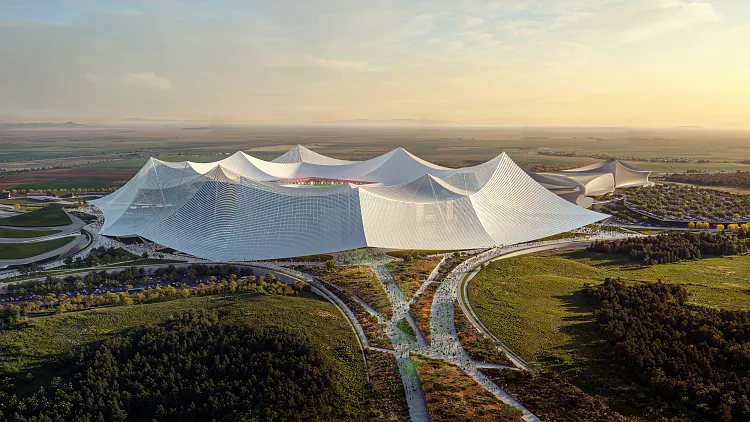
Morocco has unveiled the project for the future largest football stadium on the planet — Grand Stade Hassan II. The new arena, designed to accommodate 115,000 spectators, is expected to become one of the main symbols of the 2030 FIFA World Cup and is competing to host the tournament’s final match.
The project is already being described as one of the most ambitious sports facilities of the modern era. The stadium will combine large-scale sports infrastructure, contemporary architecture, and elements of traditional Moroccan culture.
Record-Breaking Stadium for the 2030 World Cup
The 2030 FIFA World Cup will become a historic event for football — for the first time, the tournament will take place across three continents: Europe, Africa, and South America.
Morocco, one of the host countries of the championship, plans to make Grand Stade Hassan II the central arena of the tournament. The stadium’s capacity will surpass even the famous Rungrado 1st of May Stadium, which is currently considered the largest football stadium in the world.
The new arena will be built approximately 38 kilometers from Casablanca on a site covering around 100 hectares.
Architecture inspired by the culture of Morocco
The project was designed by the architectural firms Oualalou + Choi and Populous — one of the world leaders in sports venue design.
The main architectural feature of the stadium will be a giant roof inspired by a traditional Moroccan tent. The architects drew inspiration from:
- the culture of moussem festivals
- traditional tents
- the natural landscapes of Morocco
- eastern architecture and gardens
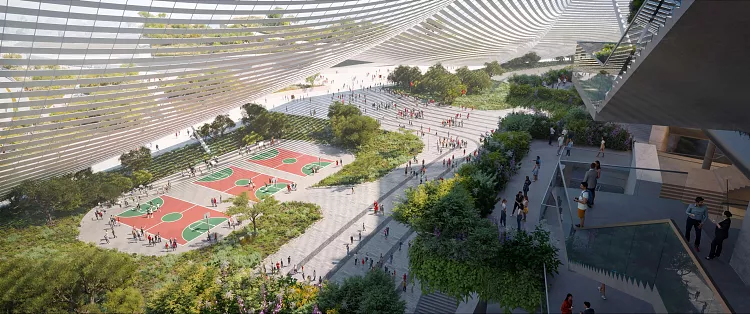
Grand Stade Hassan II is envisioned not only as a sports arena, but also as a public space that combines nature, architecture, and modern infrastructure.
Green sports oasis
A large-scale landscaped park with green gardens, sports areas, recreation zones, and public spaces is planned around Grand Stade Hassan II.
The project is based on modern principles of sustainable architecture:
- integration of nature into infrastructure
- creation of public spaces
- reduction of thermal load
- development of an eco-friendly landscape
- comfort for visitors and local residents
This approach is becoming a global trend in the design of large-scale sports facilities.
Engineering and technological solutions
Modern stadiums today are among the most complex engineering structures. Grand Stade Hassan II will require:
- complex steel structures
- BIM design
- digital modeling of crowd flows
- world-class safety systems
- intelligent management of engineering networks
- energy-efficient solutions
The project cost is estimated at approximately $455 million, and the construction is considered one of the largest infrastructure projects in Morocco in recent years.
A new generation of sports architecture
Modern stadiums have long ceased to be just venues for matches. Today, they are:
- urban public centers
- tourist attractions
- architectural symbols of a country
- venues for cultural events
- technological and engineering complexes
That is why the world’s largest stadiums are increasingly being designed with sustainability, urban integration, and digital technologies in mind.
Grand Stade Hassan II may become not only the largest football stadium in the world, but also one of the main architectural symbols of the 2030 FIFA World Cup.
Modern design and engineering approach
The implementation of projects of this scale requires a comprehensive engineering approach, BIM coordination, and precise interaction between architecture, structural solutions, and infrastructure.
Stron Engineering applies modern technologies in the design of industrial and infrastructure facilities, paying special attention to energy efficiency, digital modeling, and engineering coordination. This approach makes it possible to create technologically advanced and sustainable facilities that meet global trends in contemporary architecture and construction.
Stron
Engineering
-
INDUSTRIAL ENGINEERING
-
01
Development of design and estimate documentation for the construction of civil and industrial facilities, in frame and frameless design, monolithic and prefabricated structures and buildings, metal structures, reinforced concrete;
-
02
Design of outdoor power supply systems, outdoor and indoor electric lighting, power electrical equipment and substations;
-
03
Design of trunk and intra-block fiber-optic communication lines, video surveillance systems, security and access systems;
-
04
Design of external water supply, sewerage, water drainage and drainage, gas supply, and heat supply networks;
-
05
Engineering surveys (engineering-topographic; engineering-geodetic; engineering-hydrological, engineering-geological;
-
06
Technical inspection of buildings and structures;
-
07
ВIM design;
-
08
3D laser scanning;
-
09
Qualified legal support for projects.
-
01
-
MINING & METALLURGICAL ACTIVITIES
-
01
Development of design and estimate documentation for the construction of mining facilities;
-
02
Adaptation of projects and technological processes in the mining and metallurgical sector of foreign projects and design solutions to Kazakhstani norms and requirements;
-
03
Design of roads and railways;
-
04
Development of environmental projects;
-
05
Industrial safety;
-
06
Preparation of tender documentation;
-
07
Evaluation and analysis of objects to determine the cost of engineering and design;
-
08
ВIM design;
-
09
Comprehensive implementation of author's supervision;
-
10
Development of projects for related infrastructure facilities for mining, processing and metallurgical industries;
-
11
Carrying out engineering survey work.
-
01
-
MINING & METALLURGICAL ACTIVITIES
-
01
Development of design and estimate documentation for the construction of civil and industrial facilities, in frame and frameless design, monolithic and prefabricated structures and buildings, metal structures, reinforced concrete;
-
02
Design of outdoor power supply systems, outdoor and indoor electric lighting, power electrical equipment and substations;
-
03
Design of trunk and intra-block fiber-optic communication lines, video surveillance systems, security and access systems;
-
04
Design of external water supply, sewerage, water drainage and drainage, gas supply, and heat supply networks;
-
05
Engineering surveys (engineering-topographic; engineering-geodetic; engineering-hydrological, engineering-geological;
-
06
Technical inspection of buildings and structures;
-
07
ВIM design;
-
08
3D laser scanning;
-
09
Qualified legal support for projects.
-
01
-
CIVIL AND INDUSTRIAL ENGINEERING
-
01
Development of design and estimate documentation for the construction of mining facilities;
-
02
Adaptation of projects and technological processes in the mining and metallurgical sector of foreign projects and design solutions to Kazakhstani norms and requirements;
-
03
Design of roads and railways;
-
04
Development of environmental projects;
-
05
Industrial safety;
-
06
Preparation of tender documentation;
-
07
Evaluation and analysis of objects to determine the cost of engineering and design;
-
08
ВIM design;
-
09
Comprehensive implementation of author's supervision;
-
10
Development of projects for related infrastructure facilities for mining, processing and metallurgical industries;
-
11
Carrying out engineering survey work.
-
01
-
CIVIL AND INDUSTRIAL ENGINEERING
-
01
Development of design and estimate documentation for the construction of civil and industrial facilities, in frame and frameless design, monolithic and prefabricated structures and buildings, metal structures, reinforced concrete;
-
02
Design of outdoor power supply systems, outdoor and indoor electric lighting, power electrical equipment and substations;
-
03
Design of trunk and intra-block fiber-optic communication lines, video surveillance systems, security and access systems;
-
04
Design of external water supply, sewerage, water drainage and drainage, gas supply, and heat supply networks;
-
05
Engineering surveys (engineering-topographic; engineering-geodetic; engineering-hydrological, engineering-geological;
-
06
Technical inspection of buildings and structures;
-
07
ВIM design;
-
08
3D laser scanning;
-
09
Qualified legal support for projects.
-
01
-
MINING & METALLURGICAL ACTIVITIES
-
01
Development of design and estimate documentation for the construction of mining facilities;
-
02
Adaptation of projects and technological processes in the mining and metallurgical sector of foreign projects and design solutions to Kazakhstani norms and requirements;
-
03
Design of roads and railways;
-
04
Development of environmental projects;
-
05
Industrial safety;
-
06
Preparation of tender documentation;
-
07
Evaluation and analysis of objects to determine the cost of engineering and design;
-
08
ВIM design;
-
09
Comprehensive implementation of author's supervision;
-
10
Development of projects for related infrastructure facilities for mining, processing and metallurgical industries;
-
11
Carrying out engineering survey work.
-
01
-
What We Offer:
Employment:
Work in a Kazakhstan-based company
Salary:
USD 3–5 per hour.
Payment is task-based: each task is assigned with a clearly defined number of hours based on an 8-hour workday. If a task is completed ahead of schedule, payment will be made upon actual completion.
Location:
Kostanay, Kazakhstan
Key Responsibilities:
Architectural design solutions;
Coordination with engineering disciplines.
Requirements:
Higher education in Architecture;
At least 10 years of experience on industrial projects;
Technical English proficiency (mandatory);
Proficiency in Archicad, AutoCAD, Revit;
Mandatory experience working with BIM;
Relevant professional certificates and completion of specialized courses are required.
comments (0)
Leave a comment