


-
-
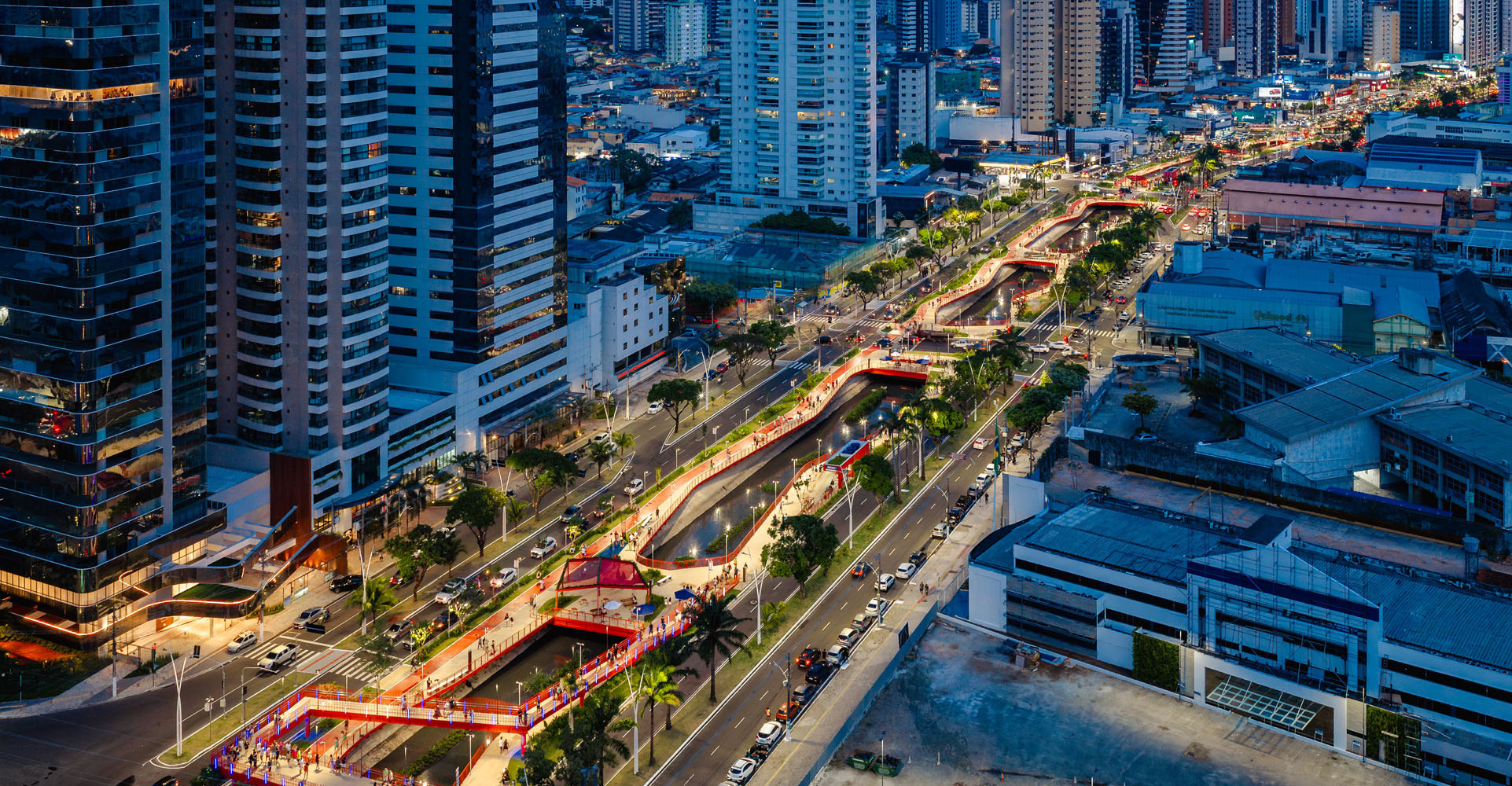
Doca Linear Park is part of a broader urban transformation strategy for Belém, implemented in preparation for COP30. The project restores water as a central element of the urban structure by revitalizing the historic Igarapé das Almas canal, which was previously concealed beneath fragmented infrastructure.
Historically, waterways played a key role in shaping Belém’s identity. Over time, however, many canals were filled in, leading to environmental degradation and a weakened connection between the city and its natural landscape. The Doca Linear Park addresses these challenges by activating a 1.2 km stretch of canal and transforming it into a continuous public space.
Project Concept
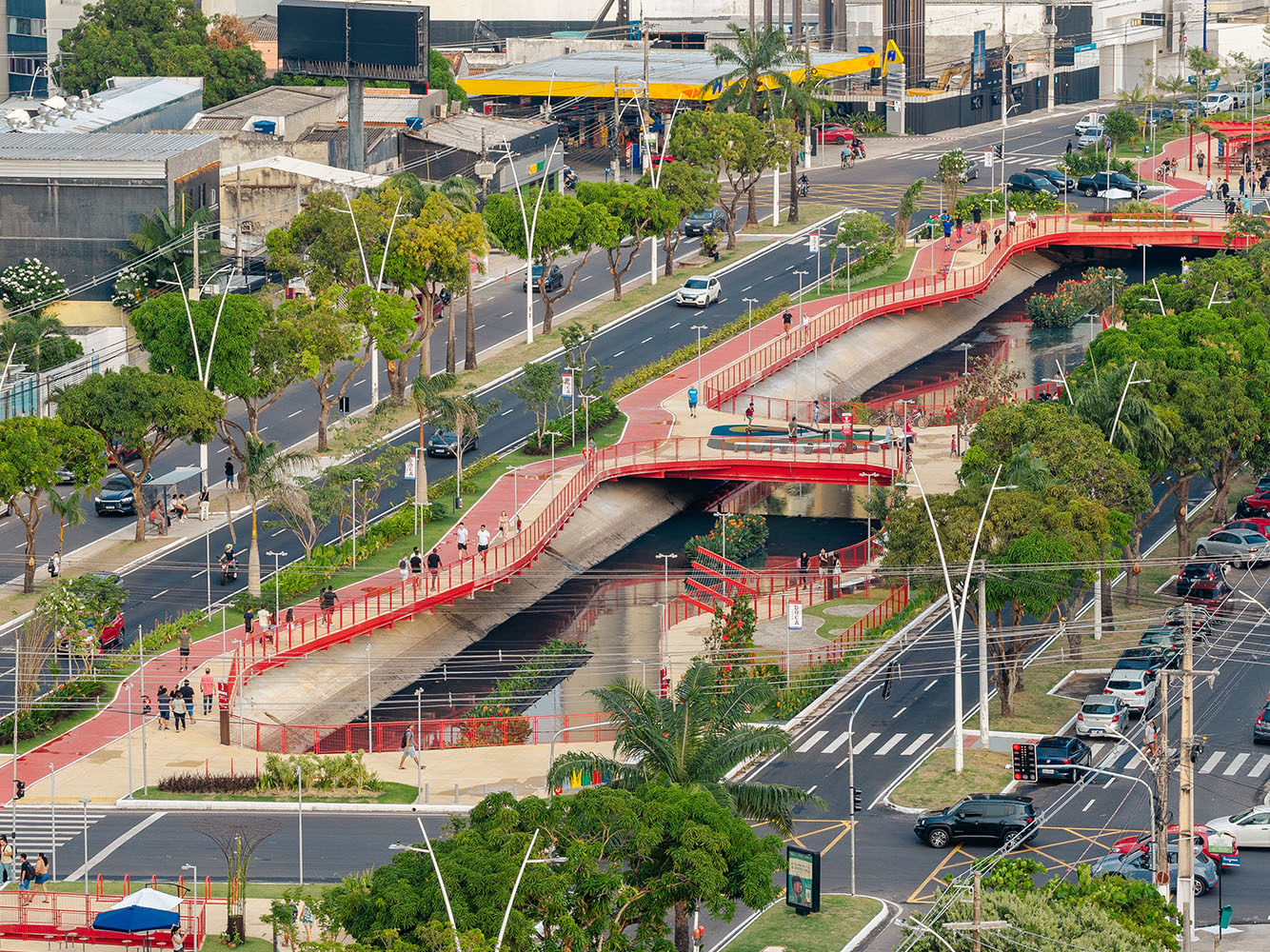
The project is based on a linear elevated structure that follows the geometry of the watercourse. Instead of creating a massive architectural landmark, the designers proposed a system of lightweight and adaptable elements that are organically integrated into the existing urban fabric.
Along the canal, a continuous pedestrian and cycling route is organized, forming a new urban axis and offering alternative ways of interacting with the landscape. The project emphasizes permeability, openness, and visual continuity, keeping water at the center of spatial perception.
Functional Program and Spatial Structure
The park is designed as a sequence of public spaces distributed along its entire length:
- Viewing platforms
- Small retail kiosks
- Children’s playgrounds
- Dog walking areas
- Gardens and landscaped terraces
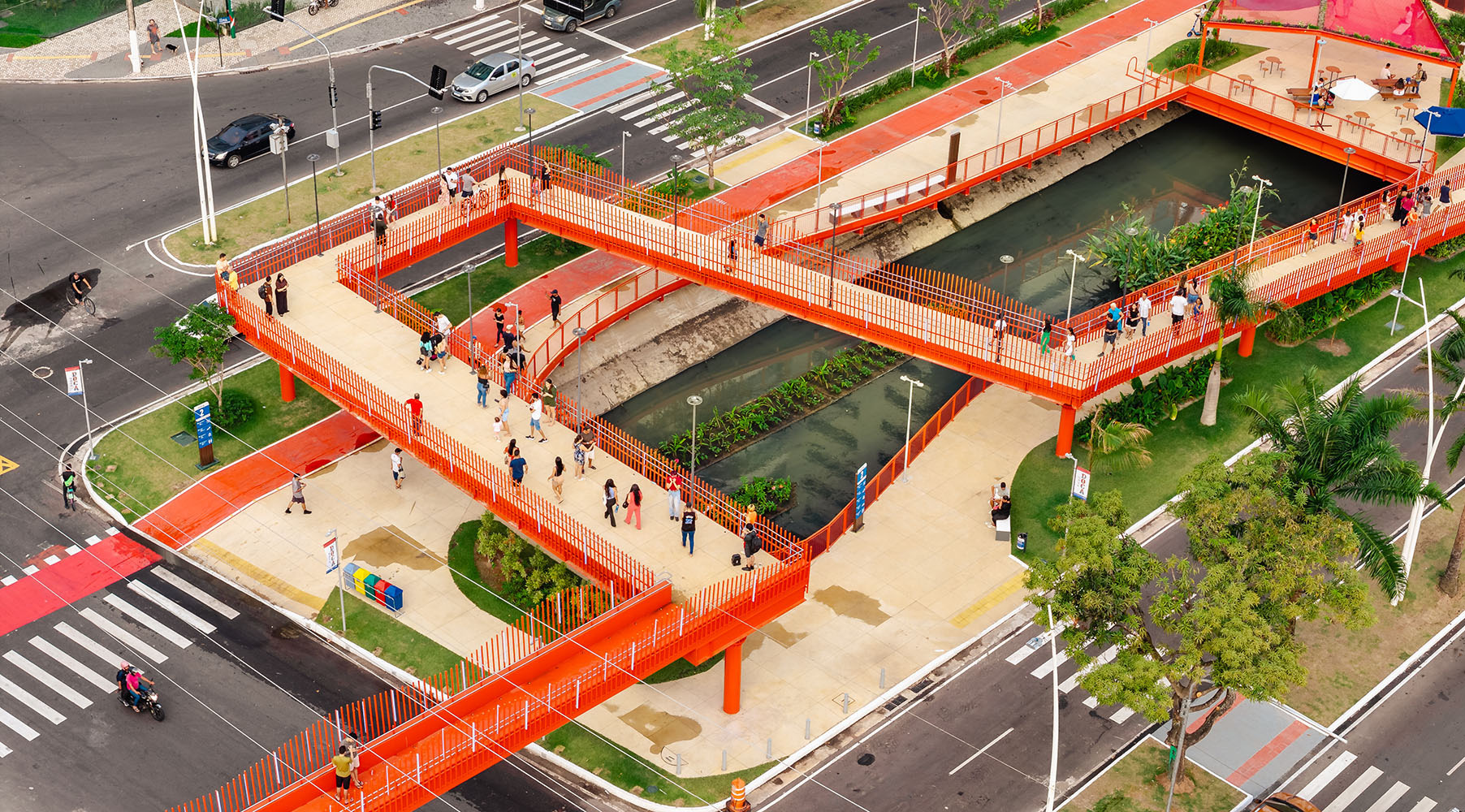
These elements are implemented as modular inserts along the linear structure, creating an alternation of active and calm zones. The space is designed to support both dynamic use and contemplative stays.
Materials and Environmental Strategy
The project is focused on minimal intervention and environmental integration. The use of lightweight structures reduces the load on the existing environment, while multi-layered local vegetation contributes to ecosystem restoration.
Terraced landscapes and greenery help to:
- reduce urban heat island effects
- improve the microclimate
- increase biodiversity
The transformation of a previously closed canal into an open ecological axis becomes a key element of the territory’s sustainable development.
Water as Infrastructure
Within the project, water is considered not as a constraint, but as a form-generating element. The canal is reintegrated into the structure of urban life, strengthening its ecological, cultural, and spatial significance.
This approach resonates with the views of Ailton Krenak, who emphasizes the need to restore the connection between humans and natural systems, including rivers as living entities.
Community Engagement
The project development process included active engagement with local residents, schools, and community organizations. This approach made it possible to shape a program that responds to the real needs of users and enhances the social significance of the space.
Doca Linear Park demonstrates an alternative model of urban regeneration based on the restoration of the natural environment, the development of public spaces, and the formation of a continuous urban fabric.
The integration of water infrastructure into public space helps to establish a new connection between the city and its natural landscape.
Stron
Engineering
-
INDUSTRIAL ENGINEERING
-
01
Development of design and estimate documentation for the construction of civil and industrial facilities, in frame and frameless design, monolithic and prefabricated structures and buildings, metal structures, reinforced concrete;
-
02
Design of outdoor power supply systems, outdoor and indoor electric lighting, power electrical equipment and substations;
-
03
Design of trunk and intra-block fiber-optic communication lines, video surveillance systems, security and access systems;
-
04
Design of external water supply, sewerage, water drainage and drainage, gas supply, and heat supply networks;
-
05
Engineering surveys (engineering-topographic; engineering-geodetic; engineering-hydrological, engineering-geological;
-
06
Technical inspection of buildings and structures;
-
07
ВIM design;
-
08
3D laser scanning;
-
09
Qualified legal support for projects.
-
01
-
MINING & METALLURGICAL ACTIVITIES
-
01
Development of design and estimate documentation for the construction of mining facilities;
-
02
Adaptation of projects and technological processes in the mining and metallurgical sector of foreign projects and design solutions to Kazakhstani norms and requirements;
-
03
Design of roads and railways;
-
04
Development of environmental projects;
-
05
Industrial safety;
-
06
Preparation of tender documentation;
-
07
Evaluation and analysis of objects to determine the cost of engineering and design;
-
08
ВIM design;
-
09
Comprehensive implementation of author's supervision;
-
10
Development of projects for related infrastructure facilities for mining, processing and metallurgical industries;
-
11
Carrying out engineering survey work.
-
01
-
MINING & METALLURGICAL ACTIVITIES
-
01
Development of design and estimate documentation for the construction of civil and industrial facilities, in frame and frameless design, monolithic and prefabricated structures and buildings, metal structures, reinforced concrete;
-
02
Design of outdoor power supply systems, outdoor and indoor electric lighting, power electrical equipment and substations;
-
03
Design of trunk and intra-block fiber-optic communication lines, video surveillance systems, security and access systems;
-
04
Design of external water supply, sewerage, water drainage and drainage, gas supply, and heat supply networks;
-
05
Engineering surveys (engineering-topographic; engineering-geodetic; engineering-hydrological, engineering-geological;
-
06
Technical inspection of buildings and structures;
-
07
ВIM design;
-
08
3D laser scanning;
-
09
Qualified legal support for projects.
-
01
-
CIVIL AND INDUSTRIAL ENGINEERING
-
01
Development of design and estimate documentation for the construction of mining facilities;
-
02
Adaptation of projects and technological processes in the mining and metallurgical sector of foreign projects and design solutions to Kazakhstani norms and requirements;
-
03
Design of roads and railways;
-
04
Development of environmental projects;
-
05
Industrial safety;
-
06
Preparation of tender documentation;
-
07
Evaluation and analysis of objects to determine the cost of engineering and design;
-
08
ВIM design;
-
09
Comprehensive implementation of author's supervision;
-
10
Development of projects for related infrastructure facilities for mining, processing and metallurgical industries;
-
11
Carrying out engineering survey work.
-
01
-
CIVIL AND INDUSTRIAL ENGINEERING
-
01
Development of design and estimate documentation for the construction of civil and industrial facilities, in frame and frameless design, monolithic and prefabricated structures and buildings, metal structures, reinforced concrete;
-
02
Design of outdoor power supply systems, outdoor and indoor electric lighting, power electrical equipment and substations;
-
03
Design of trunk and intra-block fiber-optic communication lines, video surveillance systems, security and access systems;
-
04
Design of external water supply, sewerage, water drainage and drainage, gas supply, and heat supply networks;
-
05
Engineering surveys (engineering-topographic; engineering-geodetic; engineering-hydrological, engineering-geological;
-
06
Technical inspection of buildings and structures;
-
07
ВIM design;
-
08
3D laser scanning;
-
09
Qualified legal support for projects.
-
01
-
MINING & METALLURGICAL ACTIVITIES
-
01
Development of design and estimate documentation for the construction of mining facilities;
-
02
Adaptation of projects and technological processes in the mining and metallurgical sector of foreign projects and design solutions to Kazakhstani norms and requirements;
-
03
Design of roads and railways;
-
04
Development of environmental projects;
-
05
Industrial safety;
-
06
Preparation of tender documentation;
-
07
Evaluation and analysis of objects to determine the cost of engineering and design;
-
08
ВIM design;
-
09
Comprehensive implementation of author's supervision;
-
10
Development of projects for related infrastructure facilities for mining, processing and metallurgical industries;
-
11
Carrying out engineering survey work.
-
01
-
What We Offer:
Employment:
Work in a Kazakhstan-based company
Salary:
USD 3–5 per hour.
Payment is task-based: each task is assigned with a clearly defined number of hours based on an 8-hour workday. If a task is completed ahead of schedule, payment will be made upon actual completion.
Location:
Kostanay, Kazakhstan
Key Responsibilities:
Architectural design solutions;
Coordination with engineering disciplines.
Requirements:
Higher education in Architecture;
At least 10 years of experience on industrial projects;
Technical English proficiency (mandatory);
Proficiency in Archicad, AutoCAD, Revit;
Mandatory experience working with BIM;
Relevant professional certificates and completion of specialized courses are required.


comments (0)
Leave a comment