


-
-
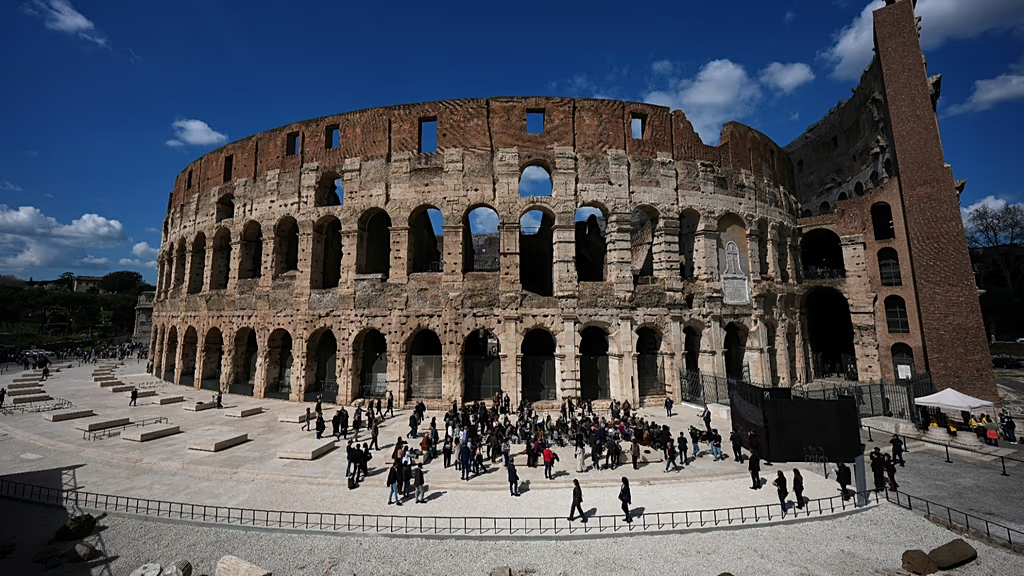
One of the most significant cultural heritage preservation projects of recent years has been completed in Rome — the large-scale restoration of the Colosseum. The renewal of the legendary amphitheater has revealed elements of its original structure that had remained hidden beneath layers of soil for centuries.
Visitors can now see restored sections of the ancient Colosseum perimeter, original entrance arches, and navigation elements from the era of Ancient Rome.
The restoration has returned the Colosseum to its historical appearance
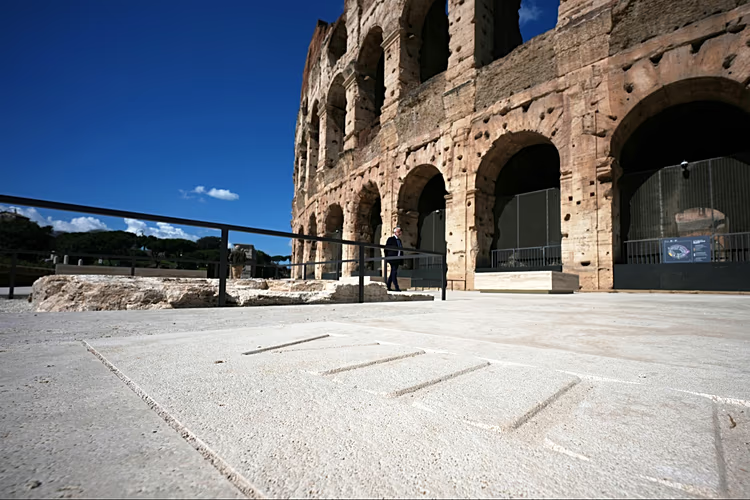
During the works, new travertine blocks were installed around the amphitheater — the same stone used in the construction of the Colosseum nearly two thousand years ago. They mark the locations where massive columns of the ceremonial entrances once stood.
Architects and restoration specialists aimed to restore the historical geometry of the structure as accurately as possible. As a result, the original layout of the Flavian Amphitheater has become legible again, allowing visitors to better understand the true scale of the ancient monument.
Special attention was given to the entrance arches. In ancient times, each arch had its own number engraved above the opening. This system helped spectators quickly find their seats during gladiatorial games and large public events.

Archaeologists have uncovered corridors hidden for centuries
One of the most impressive parts of the project was the restoration of sections of ancient entrance corridors, which had been destroyed as early as the 6th century AD.
According to representatives of Italy’s Ministry of Cultural Heritage, the damage was caused by unstable soil conditions in the area of the amphitheater. The lost sections have now been partially reconstructed, offering a clearer understanding of how the Colosseum functioned during its peak.
The restoration also included the drainage system. Engineers developed a modern hydraulic solution that helps protect the monument from deterioration while also making the site more accessible and comfortable for visitors.
A new public space in the heart of Rome
After the reconstruction, a renewed public space with travertine paving has appeared around the Colosseum. It has become more open and comfortable for walking, while also offering a new perspective on the architecture of the ancient amphitheater.
The project not only improved the tourist infrastructure but also brought modern Rome closer to its ancient past. Visitors can now literally walk along the routes used by the inhabitants of Ancient Rome nearly two thousand years ago.
The Colosseum remains a symbol of Italy
The Colosseum continues to be the most visited landmark in Italy, attracting millions of tourists from around the world every year. The new restoration makes the monument even more impressive and helps preserve its unique architectural heritage for future generations.
The renewed appearance of the amphitheater is already being called one of the most important restoration projects in modern Europe, combining archaeology, architecture, and advanced engineering technologies.
Modern restoration projects and the role of engineering
The large-scale restoration of the Colosseum once again demonstrates how important modern engineering technologies, precise calculations, and a comprehensive approach are when working with architectural heritage and large infrastructure objects. Today, successful projects require the integration of architecture, construction, engineering, and digital solutions.
This is exactly the approach applied by Stron Engineering, a company operating in the field of industrial design, engineering, and the implementation of complex facilities. Modern engineering solutions, attention to detail, and the use of advanced technologies make it possible to create reliable and efficient projects that meet the high standards of contemporary architecture and construction.
Stron
Engineering
-
INDUSTRIAL ENGINEERING
-
01
Development of design and estimate documentation for the construction of civil and industrial facilities, in frame and frameless design, monolithic and prefabricated structures and buildings, metal structures, reinforced concrete;
-
02
Design of outdoor power supply systems, outdoor and indoor electric lighting, power electrical equipment and substations;
-
03
Design of trunk and intra-block fiber-optic communication lines, video surveillance systems, security and access systems;
-
04
Design of external water supply, sewerage, water drainage and drainage, gas supply, and heat supply networks;
-
05
Engineering surveys (engineering-topographic; engineering-geodetic; engineering-hydrological, engineering-geological;
-
06
Technical inspection of buildings and structures;
-
07
ВIM design;
-
08
3D laser scanning;
-
09
Qualified legal support for projects.
-
01
-
MINING & METALLURGICAL ACTIVITIES
-
01
Development of design and estimate documentation for the construction of mining facilities;
-
02
Adaptation of projects and technological processes in the mining and metallurgical sector of foreign projects and design solutions to Kazakhstani norms and requirements;
-
03
Design of roads and railways;
-
04
Development of environmental projects;
-
05
Industrial safety;
-
06
Preparation of tender documentation;
-
07
Evaluation and analysis of objects to determine the cost of engineering and design;
-
08
ВIM design;
-
09
Comprehensive implementation of author's supervision;
-
10
Development of projects for related infrastructure facilities for mining, processing and metallurgical industries;
-
11
Carrying out engineering survey work.
-
01
-
MINING & METALLURGICAL ACTIVITIES
-
01
Development of design and estimate documentation for the construction of civil and industrial facilities, in frame and frameless design, monolithic and prefabricated structures and buildings, metal structures, reinforced concrete;
-
02
Design of outdoor power supply systems, outdoor and indoor electric lighting, power electrical equipment and substations;
-
03
Design of trunk and intra-block fiber-optic communication lines, video surveillance systems, security and access systems;
-
04
Design of external water supply, sewerage, water drainage and drainage, gas supply, and heat supply networks;
-
05
Engineering surveys (engineering-topographic; engineering-geodetic; engineering-hydrological, engineering-geological;
-
06
Technical inspection of buildings and structures;
-
07
ВIM design;
-
08
3D laser scanning;
-
09
Qualified legal support for projects.
-
01
-
CIVIL AND INDUSTRIAL ENGINEERING
-
01
Development of design and estimate documentation for the construction of mining facilities;
-
02
Adaptation of projects and technological processes in the mining and metallurgical sector of foreign projects and design solutions to Kazakhstani norms and requirements;
-
03
Design of roads and railways;
-
04
Development of environmental projects;
-
05
Industrial safety;
-
06
Preparation of tender documentation;
-
07
Evaluation and analysis of objects to determine the cost of engineering and design;
-
08
ВIM design;
-
09
Comprehensive implementation of author's supervision;
-
10
Development of projects for related infrastructure facilities for mining, processing and metallurgical industries;
-
11
Carrying out engineering survey work.
-
01
-
CIVIL AND INDUSTRIAL ENGINEERING
-
01
Development of design and estimate documentation for the construction of civil and industrial facilities, in frame and frameless design, monolithic and prefabricated structures and buildings, metal structures, reinforced concrete;
-
02
Design of outdoor power supply systems, outdoor and indoor electric lighting, power electrical equipment and substations;
-
03
Design of trunk and intra-block fiber-optic communication lines, video surveillance systems, security and access systems;
-
04
Design of external water supply, sewerage, water drainage and drainage, gas supply, and heat supply networks;
-
05
Engineering surveys (engineering-topographic; engineering-geodetic; engineering-hydrological, engineering-geological;
-
06
Technical inspection of buildings and structures;
-
07
ВIM design;
-
08
3D laser scanning;
-
09
Qualified legal support for projects.
-
01
-
MINING & METALLURGICAL ACTIVITIES
-
01
Development of design and estimate documentation for the construction of mining facilities;
-
02
Adaptation of projects and technological processes in the mining and metallurgical sector of foreign projects and design solutions to Kazakhstani norms and requirements;
-
03
Design of roads and railways;
-
04
Development of environmental projects;
-
05
Industrial safety;
-
06
Preparation of tender documentation;
-
07
Evaluation and analysis of objects to determine the cost of engineering and design;
-
08
ВIM design;
-
09
Comprehensive implementation of author's supervision;
-
10
Development of projects for related infrastructure facilities for mining, processing and metallurgical industries;
-
11
Carrying out engineering survey work.
-
01
-
What We Offer:
Employment:
Work in a Kazakhstan-based company
Salary:
USD 3–5 per hour.
Payment is task-based: each task is assigned with a clearly defined number of hours based on an 8-hour workday. If a task is completed ahead of schedule, payment will be made upon actual completion.
Location:
Kostanay, Kazakhstan
Key Responsibilities:
Architectural design solutions;
Coordination with engineering disciplines.
Requirements:
Higher education in Architecture;
At least 10 years of experience on industrial projects;
Technical English proficiency (mandatory);
Proficiency in Archicad, AutoCAD, Revit;
Mandatory experience working with BIM;
Relevant professional certificates and completion of specialized courses are required.
comments (0)
Leave a comment